Higher Education, upgraded.

RHF helps higher-education institutions evolve from fragmented, activity driven efforts into a measurable, fundable, and auditable institutional operating model.

This model is purpose built to align academic priorities with national accreditation frameworks (NAAC, NIRF, NBA), emerging SDG performance metrics, and global benchmarks such as Times Higher Education (THE) Impact Rankings and Quacquarelli Symonds (QS) Sustainability Rankings.

Automation-first Research Management System (RMS)
SDG Strategy 2–3 Key SDG themes
Funding Pathways CSR + Grants
Evidence & Rankings NAAC • NIRF • THE
Governance & Oversight IQAC • Research Committees
Impact Reporting Annual SDG / Sustainability Reports
What HEIs get with RHF ?

A structured operating system for research, SDG impact, and ranking-grade evidence.

One platform. Four leadership-level wins.
Research Management System (RMS)

Lifecycle tracking, repositories, analytics dashboards, Institution-wide.

Grant pipeline & proposal enablement

Opportunity mapping, drafting workflows, reviews, deadline alerts.

TRIIMPACT CoEs, labs & student clubs

Campus + community pilots with governance, KPIs, and Measurable outcomes.

Evidence packs (audit-ready)

NAAC/NIRF/NBA/THE aligned capture, tagging, Audit‑ready.

Why Research Heights for Higher Education?

"Institutions that fail audits usually didn't lack work - they lacked structured, retrievable evidence."

Institutions win when they can prove outcomes. RHF converts research and SDG work into fundable projects and verifiable evidence for rankings and accreditation.

Automation leadership can trust

Standard workflows, approvals, and dashboards that reduce reporting chaos and improve decision speed.

Industry & CSR-ready packaging

Problem statements → project packs → governance → utilization → audit—built for CSR/ESG confidence.

Funding pipeline discipline

Grant mapping, proposal enablement, and deadline tracking—so funding becomes predictable, not accidental.

Accreditation & ranking evidence

Evidence tagging aligned to NAAC criteria, NIRF metrics, and NBA outcomes—ready for audits and submissions.

IP, patents & tech transfer

From disclosure to filing to licensing—supporting commercialization and institutional revenue credibility.

Research intelligence & benchmarking

Directly feeds NAAC/NIRF gap analysis, ranking narratives, institutional strategy.

Offerings for Higher Education

A practical stack: automate research, strengthen funding readiness, and convert impact into institutional evidence.
Research Lab
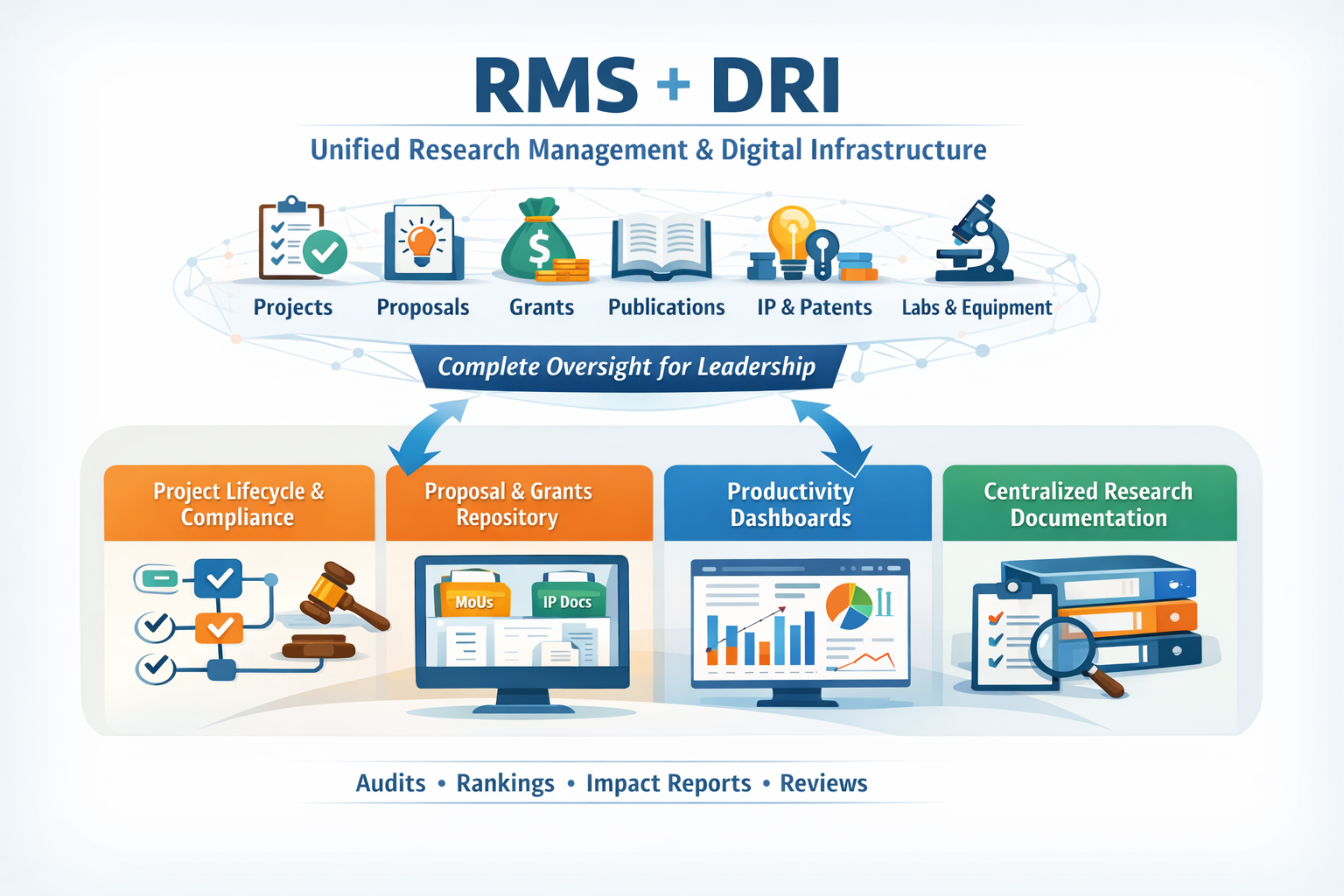
Research Management System (RMS) + Digital Research Infrastructure (DRI)

Unified tracking for projects, proposals, grants, publications, IP, labs/equipment, and evidence packs — all visible to leadership.

Live dashboard + evidence repository within 30–45 days

  • Project lifecycle tracking with approvals & compliance
  • Repository for proposals, grants, reports, MoUs, and IP artifacts
  • Dashboards for department/faculty productivity and impact reporting
  • Centralized research documentation for audits, rankings, and reviews

Best suited for autonomous colleges and universities preparing for NAAC/NIRF cycles

CSR + Government Grants Enablement

Identify the right opportunities, draft stronger proposals, and track everything—from leads to sanction to utilization and reporting.

  • Grant mapping aligned to institutional SDG themes
  • Proposal workflows + internal review checklists
  • Utilization dashboards and audit-ready documentation
  • Sanction-readiness support (DPRs, budgets, timelines)
Research Lab
Research Lab
Literature Review, Research Themes & Evidence Packs

Summaries, benchmarking and theme mapping to help faculty publish faster and institutions build credible narratives.

  • Thematic clustering + quick literature reviews
  • Research theme maps aligned to SDGs and national missions
  • Evidence packs for NAAC/NIRF/THE (tagging + reports)
  • Research continuity across departments (theme-based, not isolated papers)
Industry Collaboration, IP & Technology Transfer

Convert research into pilots, licenses, startups, and measurable industry outcomes—with governance and credibility.

  • Corporate problem statements + project scoping
  • IP disclosure → filing → licensing support
  • Incubation and entrepreneurship pathways
  • Structured industry reviews and demo days for validation

Research Lab

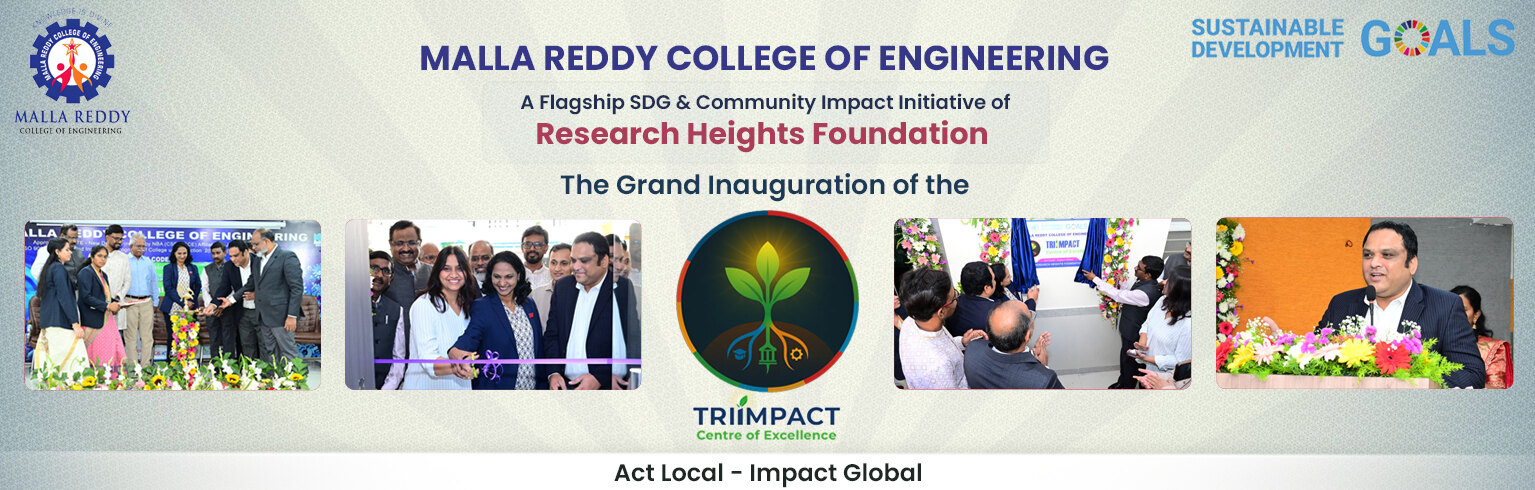
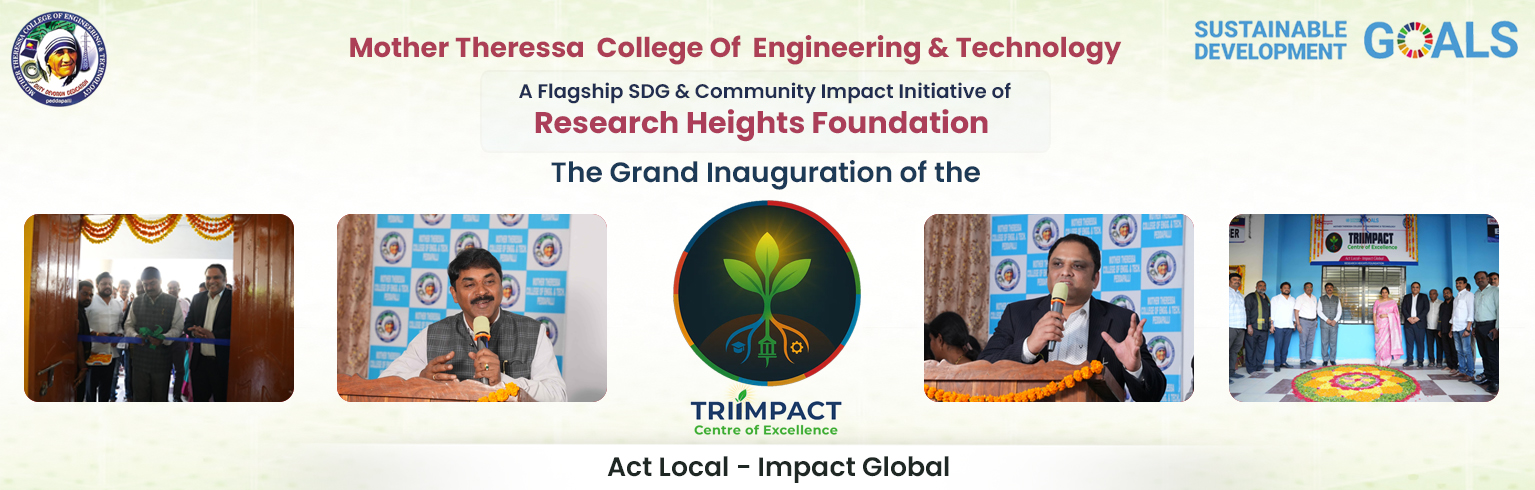
TRIIMPACT Centres of Excellence (CoEs) for HEIs

SDG 2030 meets NEP 2020 through structured pilots, measurable KPIs, and evidence packs—supporting NAAC/NIRF and global impact rankings.

Academic SDG Responsibility (ASR)
A governance model that makes SDG work measurable and auditable: KPIs, student engagement, faculty hubs, and annual reporting.
01
TRIIMPACT CoE + Lab Pilots

Start with 1-2 labs, launch pilots, and scale with funding.

  • Theme selection + baseline audit + 12-18 month roadmap
  • Labs: Energy, Climate, Water, Waste, AI4SDG, Social Innovation
  • Annual SDG/Climate report card aligned to NAAC/NIRF/THE
02
TriImpact 2047

Govt–Academia–Industry: execution + governance + audit confidence.

  • Tripartite MoU + Steering Committee + PMU
  • CSR dashboard + utilization + audit readiness
  • Village adoption + skills, livelihoods, and sustainability pilots
03
Digital Research Infrastructure (DRI)

A digital layer for shared labs/equipment, grants, repository, and collaboration.

  • Lab/equipment registry + shared access workflows
  • Grant pipeline + project lifecycle tracking
  • Research index + citation/IP analytics (IRINS-ready)
Best-fit SDG themes to start

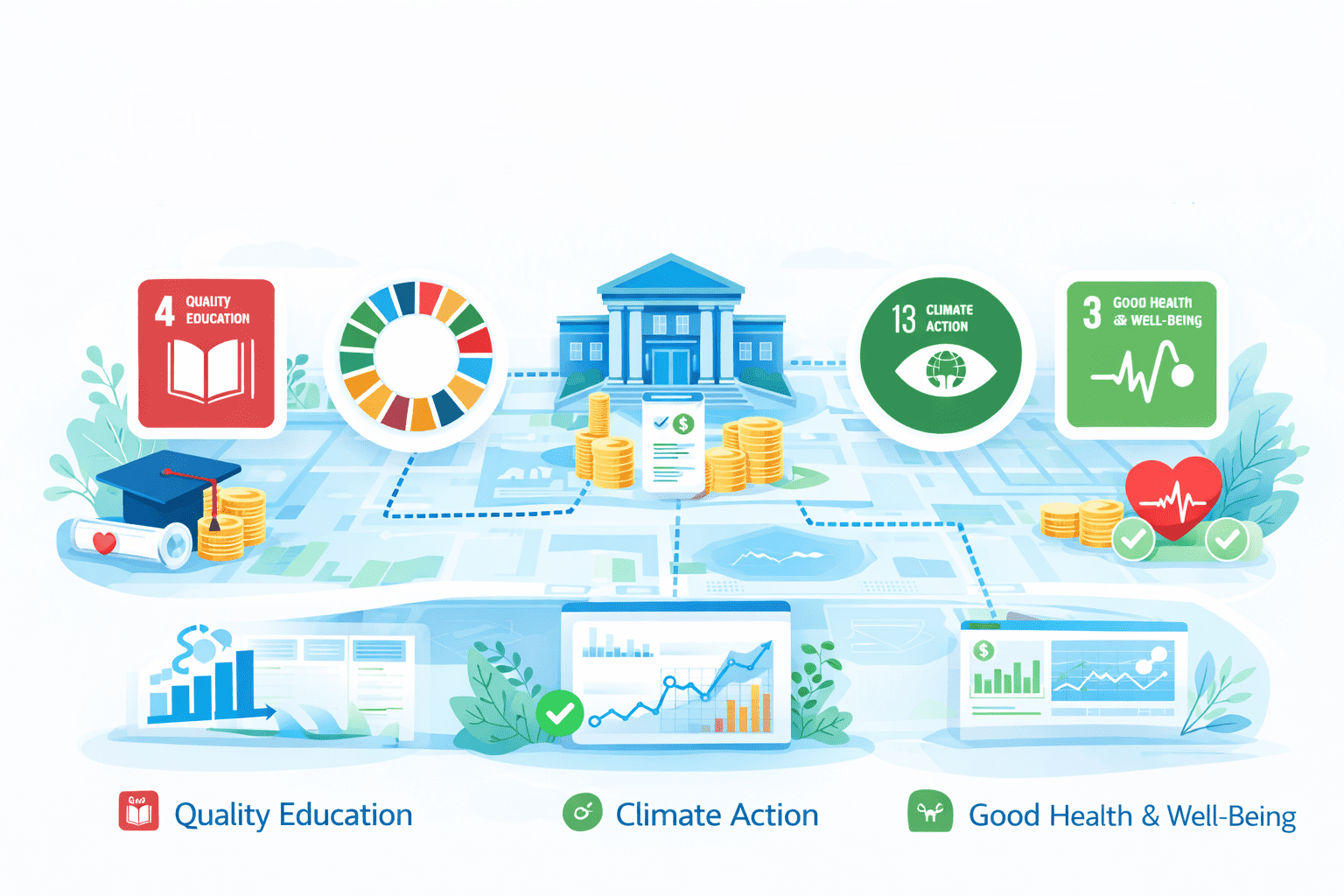
Start with 2–3 SDGs and scale. Cross-cutting themes produce the strongest evidence.

SDG 4 — Quality education & skills
SDG 6 — Water conservation & reuse
SDG 7 — Clean energy & green campus
SDG 9 — Innovation, incubation & industry labs
SDG 12 — Waste management & circular economy

SDG 13 — Climate action & carbon footprint
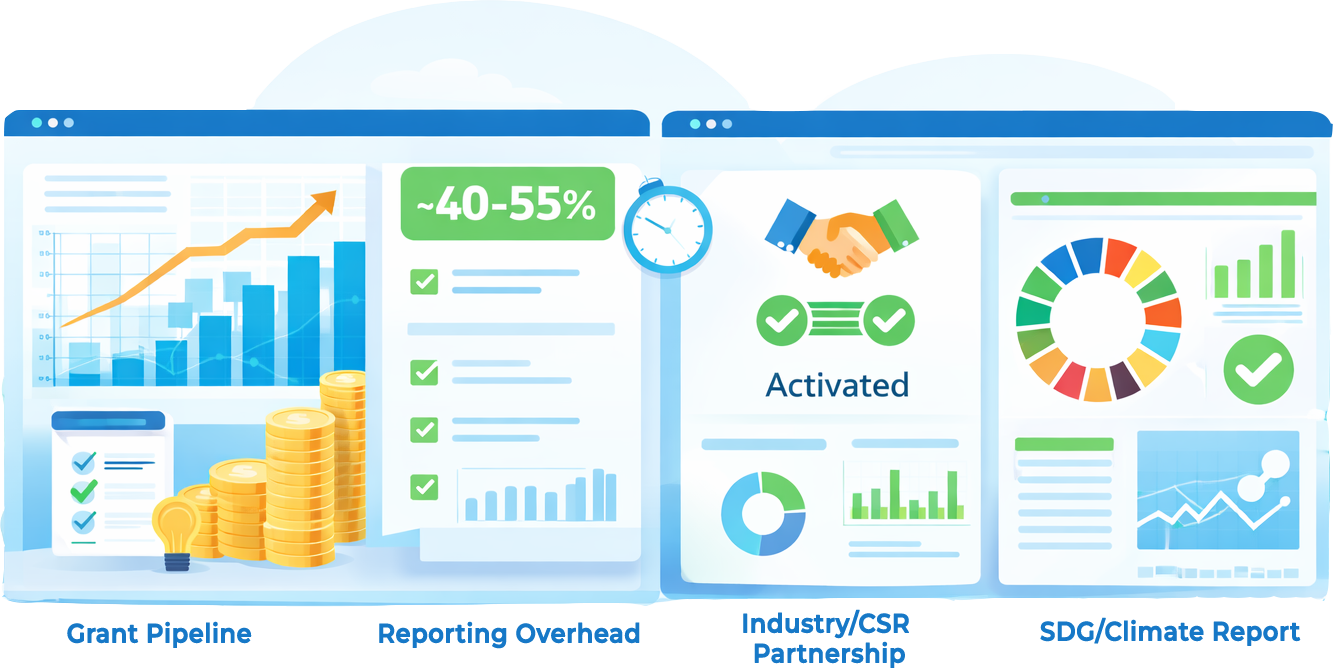
Impact Indicators

Benchmark targets based on institutional readiness & execution discipline

Increase in Grant Pipeline Conversion
+ 30-40%
Reduction in Reporting Overhead
~ 40-55%
Industry / CSR Partnerships Activated
Yes
Annual SDG / Climate Report Card
Ready

Implementation: a phased model

Readiness → funded pilots → scale and global recognition. Simple to understand. Hard to execute without discipline. That’s where RHF helps.

Phase 1
Readiness & baseline

Institutional audit, research SWOT, ranking gap scan, and a quick-win plan.

Baseline audit SWOT Gap scan
Phase 2
Implementation & funding

CoE launch, SDG lab pilots, CSR / government proposals, dashboards go-live.

CoE setup CSR / Grants Dashboards
Phase 3
Scale & globalization

Scale themes, international collaborations, and impact ranking submissions.

THE / QS MoUs Annual report

Freequently Asked Questions

Team Meeting

No. RHF works with universities, autonomous colleges, arts & science institutions, and professional colleges (engineering, management, pharmacy, education, etc.). The model is discipline-agnostic and is customized based on institutional maturity, accreditation stage, and research focus.

No. RHF is automation-first and infrastructure-light. Most institutions begin by organizing existing research, faculty work, and SDG activities into a structured system. Physical labs or CoEs are added only when funding or strategic need arises.

Most institutions see measurable improvements within 6–12 months, especially in documentation quality, evidence readiness, and structured reporting. Ranking and accreditation gains accelerate as pilots, funding, and CoEs mature.

RHF conducts an institutional baseline and alignment review, identifies priority focus areas, and shares a phased implementation roadmap with timelines, KPIs, and funding pathways.

Yes. RHF is designed to build capability from the baseline by identifying achievable focus areas, guiding faculty participation, and creating structured research and impact pathways.